
Respect for sovereignty
New producing nations, like Senegal, assert a legitimate demand for transparency and fairness. We create shared value, we do not extract it.

Connecting African resource to global markets, with discipline and a deep reading of the flows.
Oil trading is a high-value intermediation business: connecting resource to demand, at the right time, the right price, with the right logistics. Binti Invest operates across the entire hydrocarbon-trading chain — from sourcing crude and refined products to the financial structuring of cargoes, through maritime logistics and price-risk management.

Oil remains the backbone of the global energy system: close to 31% of primary energy consumption and demand of around 103 million barrels per day in 2025. For the trader, it is precisely volatility that creates opportunity — the ability to anticipate, secure and execute where others see complexity.
“In an energy-hungry world shaped by trade tensions and shifting energy policies, volatility creates opportunity for traders able to anticipate market moves.”
Wood Mackenzie · Commodity Trader's Guide, 2025
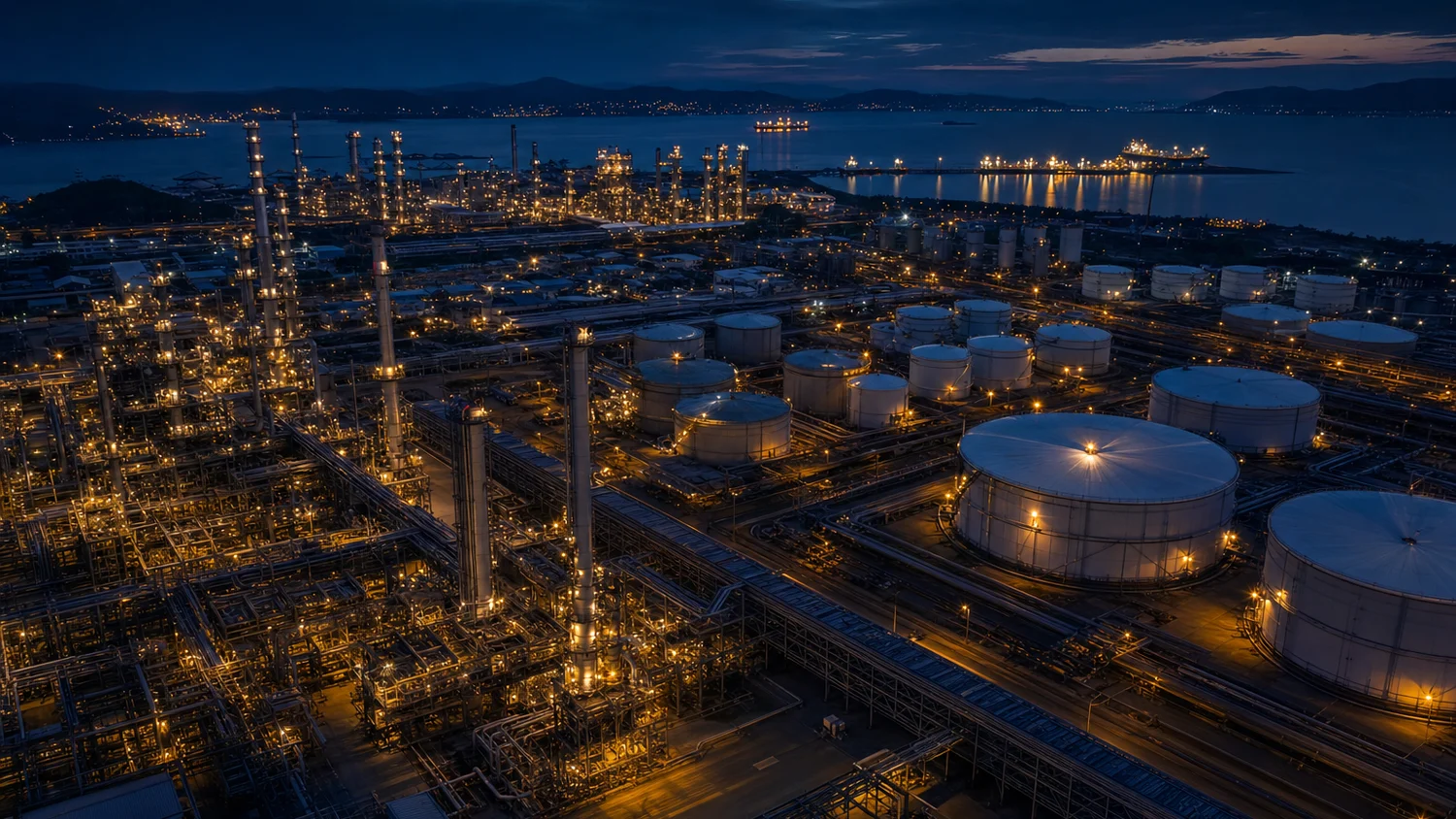
A historic shift is underway. In June 2024, Senegal became an oil producer with the offshore Sangomar field (100,000 barrels/day), then an LNG exporter in 2025 with the Greater Tortue Ahmeyim project, shared with Mauritania. Sangomar crude already ships to China, Europe and the United States.
The African paradox. Africa exports around 2.6 billion barrels of crude per year, but imports 1.4 billion as refined products. With refining margins of $10 to $25 per barrel, refining locally would represent up to 2.2% of the continent's GDP — a value chain still to be built.
“Real value lies not only in extraction, but in mastering the chain — from crude to its transformation and delivery to markets.”
The Binti Invest view
New producing nations, like Senegal, assert a legitimate demand for transparency and fairness. We create shared value, we do not extract it.
Knowledge of the ground, the institutions and regional dynamics reduces information asymmetry and lets us act where distant players hesitate.
Compliance, traceability, rigorous risk management: hydrocarbon trading allows no approximation. Our standard is that of the world's leading trading houses.

CEO, Binti Invest Oil & Gas
Carrying a cargo, a sourcing mandate or a trading operation to structure? Let's talk.
This presentation reflects the analysis and positioning of Binti Invest. It constitutes neither investment advice nor an offer or solicitation relating to any financial instrument or trading product.
Sources : Dataintelo (2025) · Wood Mackenzie (2025) · Policy Center for the New South — F. Perrin (2025) · Policy Center — H. Ghanem (2026) · OPEC via Statista (2025)